
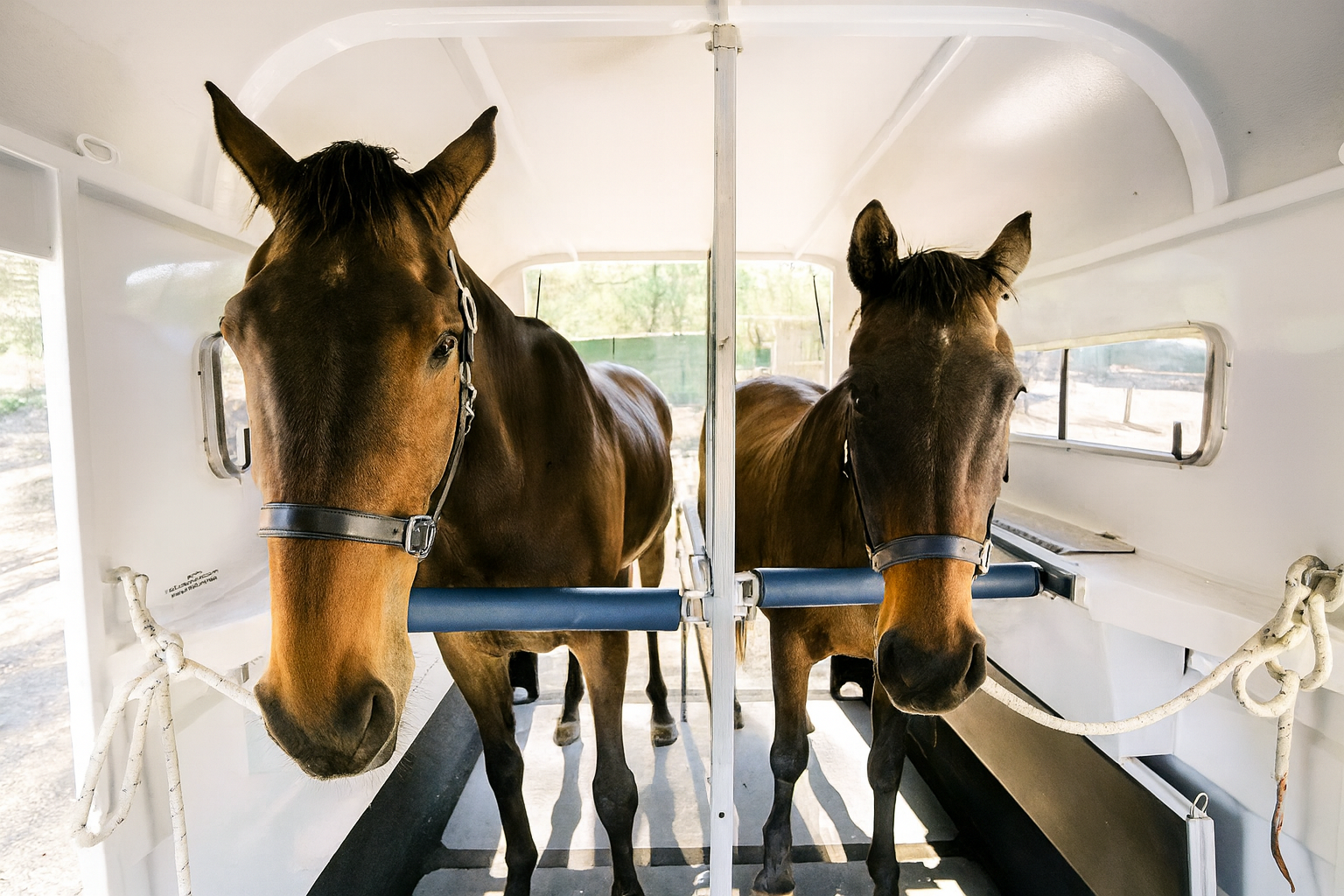
Impacts of transporting horses
Whether for competition, sale, breeding, or veterinary care, horse transport by float is a necessity in modern equestrian life. Yet beyond our desire for calm travel experience, lies a body of evidence showing that even short trips can carry significant risks to equine health and welfare.
Studies suggest that transport-related illness affects a significant proportion of horses at some point in their lives. Even brief trips can elicit a higher frequency of balance and stress related behaviours when compared to stable and rest stop behaviour. Increases in travel duration, rough roads and the length of confinement, further contribute to the stress and anxiety experienced which can be a significant contributor to negative health outcomes. Horses can develop travel anxiety and may become difficult to load and unload further increasing the stress responses of fight-or-flight reactions.

Musculoskeletal Fatigue
Musculoskeletal stress is another damaging result. Data from veterinary reports show that over 25% of transport-related injuries occur in the hind limbs of the animal, with a disproportionate number linked to poor road surfaces, inadequate float suspension, or even when the vehicle is turning a corner. A New Zealand study found that 15–20% of horses sustained visible injuries per trip, while a much higher number suffered from temporary gait stiffness, muscle soreness, anxiety, and unfortunately most of these symptoms are considered an unfortunate and unavoidable result of necessary horse transport.
Constant balancing during transport: Horses use their muscles like surfers do to stay upright when being transported, which can cause fatigue, muscle stiffness, and soreness.
- Joint strain: Especially if the journey is long and the horse can’t shift weight easily. The dynamic shockwave created between the tow vehicle and float at the tow bar point while traveling, is consistently transferred through the horses’ legs.
- Debilitating pain: While the exact percentage of horses experiencing pain during transport varies, studies indicate that a high proportion certainly experience significant pain and discomfort which understandably can led to a range of negative outcomes for the animal.
The data speaks plainly: transporting a horse in a float is not a neutral act. It is an intervention with a calculable risk profile — one that owners, trainers, and event organisers must respect. Safer suspension systems, improved ventilation, enforced rest breaks, and better driver training are not luxuries; they are the statistical antidotes to an avoidable welfare cost.
Within the industry of equine transport, comfort and safety are key points highlighted in sales brochures, however not all floats are alike. Many offer superior suspension systems claiming to provide the animal with a smoother ride, however all horse floats come with a static tow connection. Very little has been done to reduce the severe forces being applied at the tow point between the float and the tow vehicle.
Enter Oz Glide, an Australian-made dampening innovation that’s quietly transforming the horse float industry. While the focus in horse transport has traditionally been on size, ventilation, and loading ease, Oz Glide addresses a long-overlooked but critical component: “motion impact”.
Horse floats, by nature, are subjected to a constant barrage of vibration, jarring road bumps and instability which are transferred between the tow vehicle and float when a static coupling is used. These continuous dynamic impacts are incredibly stressful for horses, particularly over long distances, and can lead to fatigue, anxiety, injury, or a reluctance to load in the future. Oz Glide tackles this challenge head-on by incorporating a sophisticated dampening system designed to absorb and reduce kinetic forces during transit. The result is a
smoother, quieter, and stable ride—something that both horses and handlers will immediately feel the difference.

Oz Glide is a small Queensland based family business. Developed in Australia by Barry Blumke and his family. Oz Glide has already established itself in the caravan and trailer industry as a safety necessity rather than an optional accessory, and when applied to a horse float, it adds an unequalled humane capacity when transporting horses. Oz Glide remains a testament to the dedication and commitment Barry applied to offer safer towing for everyone, whilst ensuring the highest possible quality and performance remain their focus.

Reducing these dynamic vibrations and shocks means:
✔ Less strain on the structure of the chassis and the float
✔ Extending the life of float suspension systems, interior fittings, and flooring
✔ Reducing vibrations, shocks and bumps for horses during floating
✔ Reducing travel anxiety, stress and fatigue for your horse and ensuring
✔ Greater stability in steering and ride comfort in the tow vehicle.
Oz Glide is as much a safety feature, as it is a performance upgrade. For trainers, breeders, and competitive riders who travel frequently and value the health of their horses, this advancement could mean the difference between a fresh, focused animal and one that is stressed, stiff and less able to perform upon arrival.
Importantly, Oz Glide’s innovation is grounded in its Australian design and manufacturing. It’s a system crafted with care for Australian horse owners and the unique terrain they navigate.
In an industry steeped in tradition, Oz Glide is a breath of fresh air—a technical upgrade that doesn’t just modernize horse floats but redefines what humane, safe, and efficient equine transport should feel like. As word spreads, it may well become the new gold standard for those who truly care about what happens between the paddock and the destination.
Your horse deserves a better ride… Oz Glide